From measurement to change
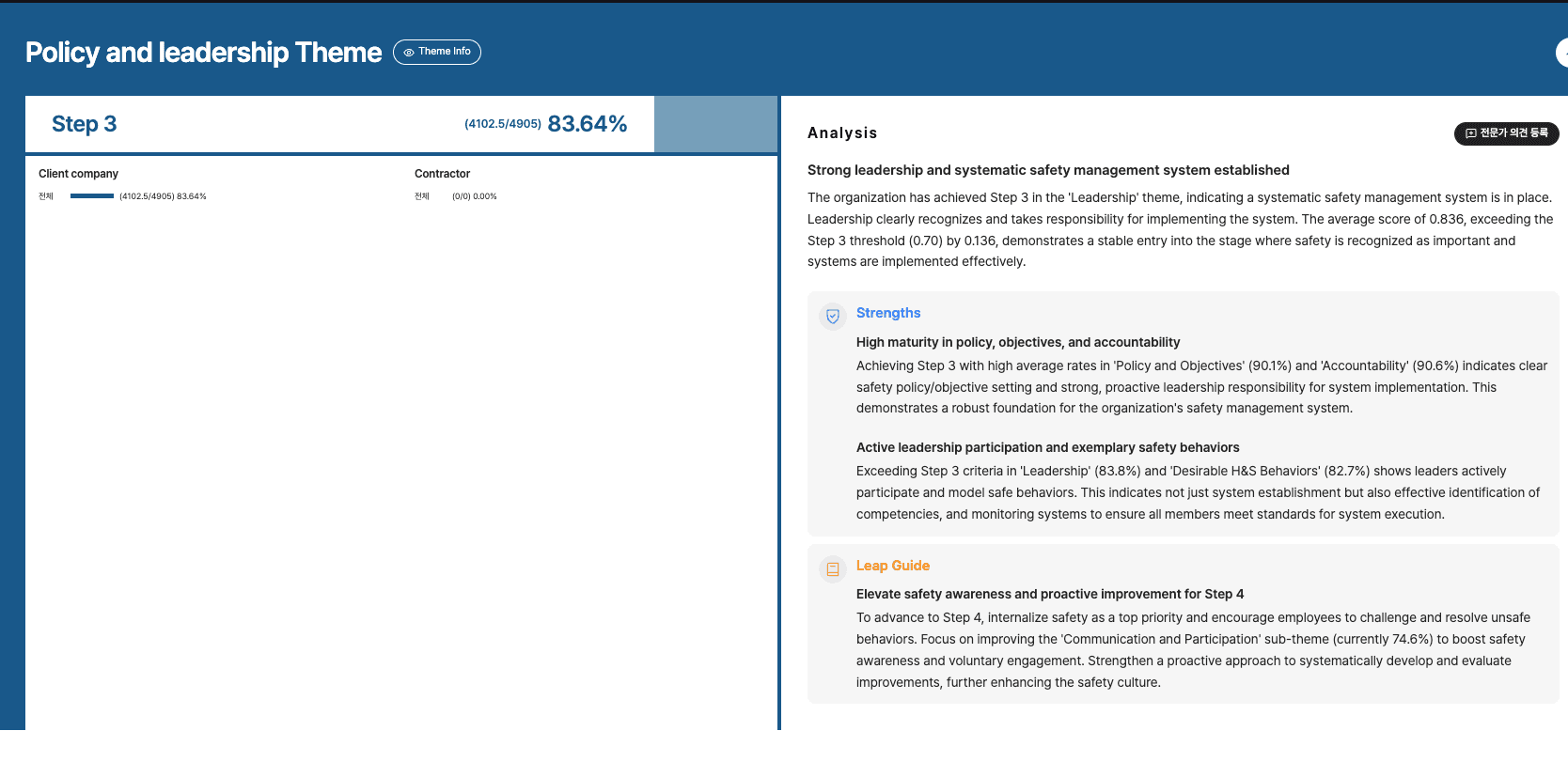
Honest measurement, honestly read, still ends as one number if the result dies in a PDF folder. A respondent's line becomes an improvement, an improvement becomes a follow-up action in the Action module, and the next survey measures the same cell again. That is when measurement becomes change.

Every year a company runs an organizational-culture diagnostic. The report comes out. The executive team receives it. And it gets saved somewhere in a PDF folder. That's where it ends. There are a lot of companies like this. The diagnostic itself isn't the problem — the problem is that the diagnostic couldn't be turned into a cycle.
The previous five parts unfolded the five grains of measurement. Atmosphere and pattern, the NEN standard, a single map, a timeline, the place of AI. This last part is about how those five close into a promise that changes one company's time.
01 · Five threads
The five promises the previous parts pinned
Pattern, not atmosphere. Atmosphere is the result; pattern is the cause. To act before the atmosphere turns, you have to measure the pattern underneath.
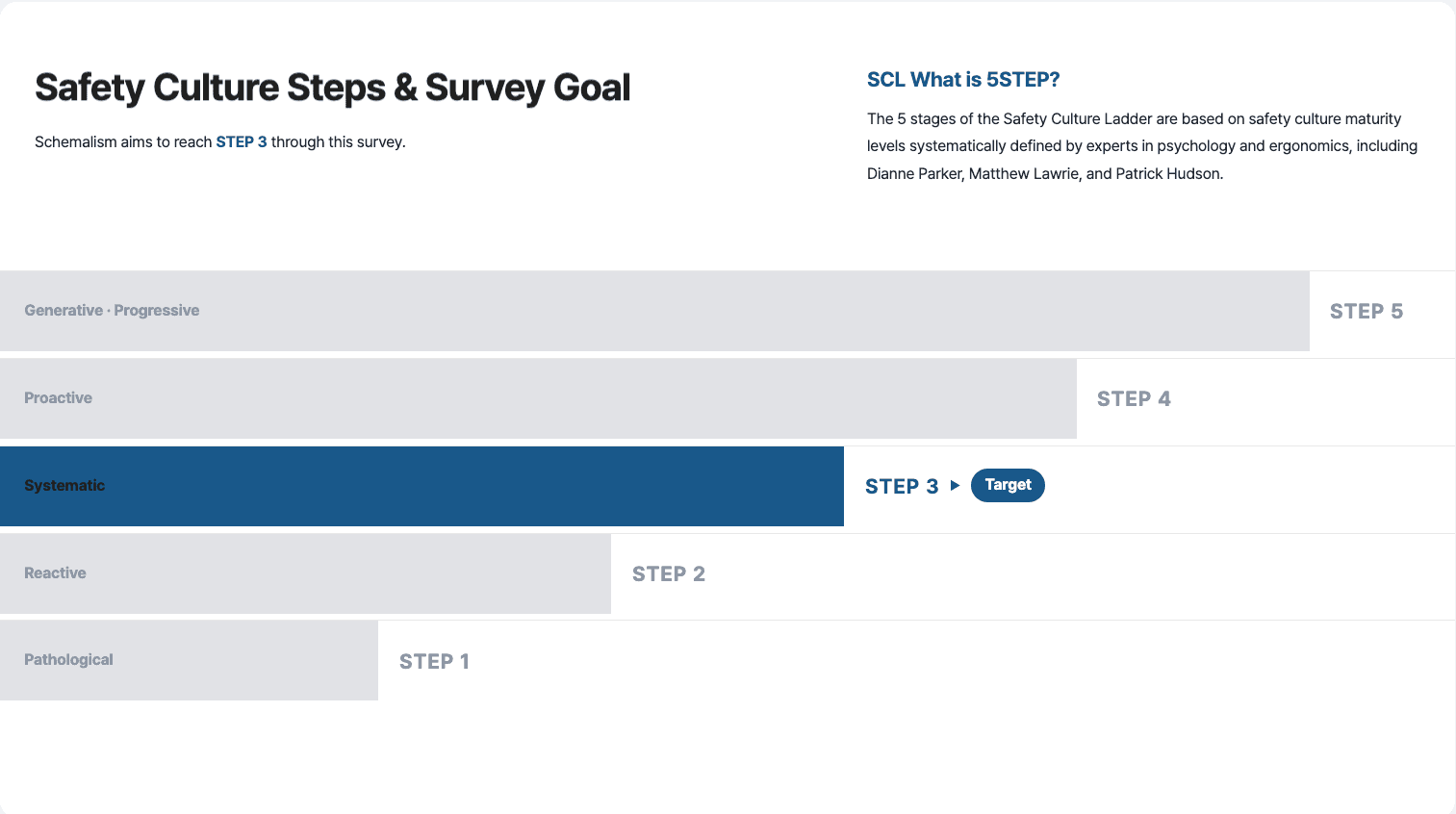
The NEN standard, not a theory.Hold up a theory as a yardstick and every company reads it differently; on top of the NEN certifiable standard, an external auditor walks in carrying the same yardstick. Culture Ladder's five steps are lifted from that standard as is.
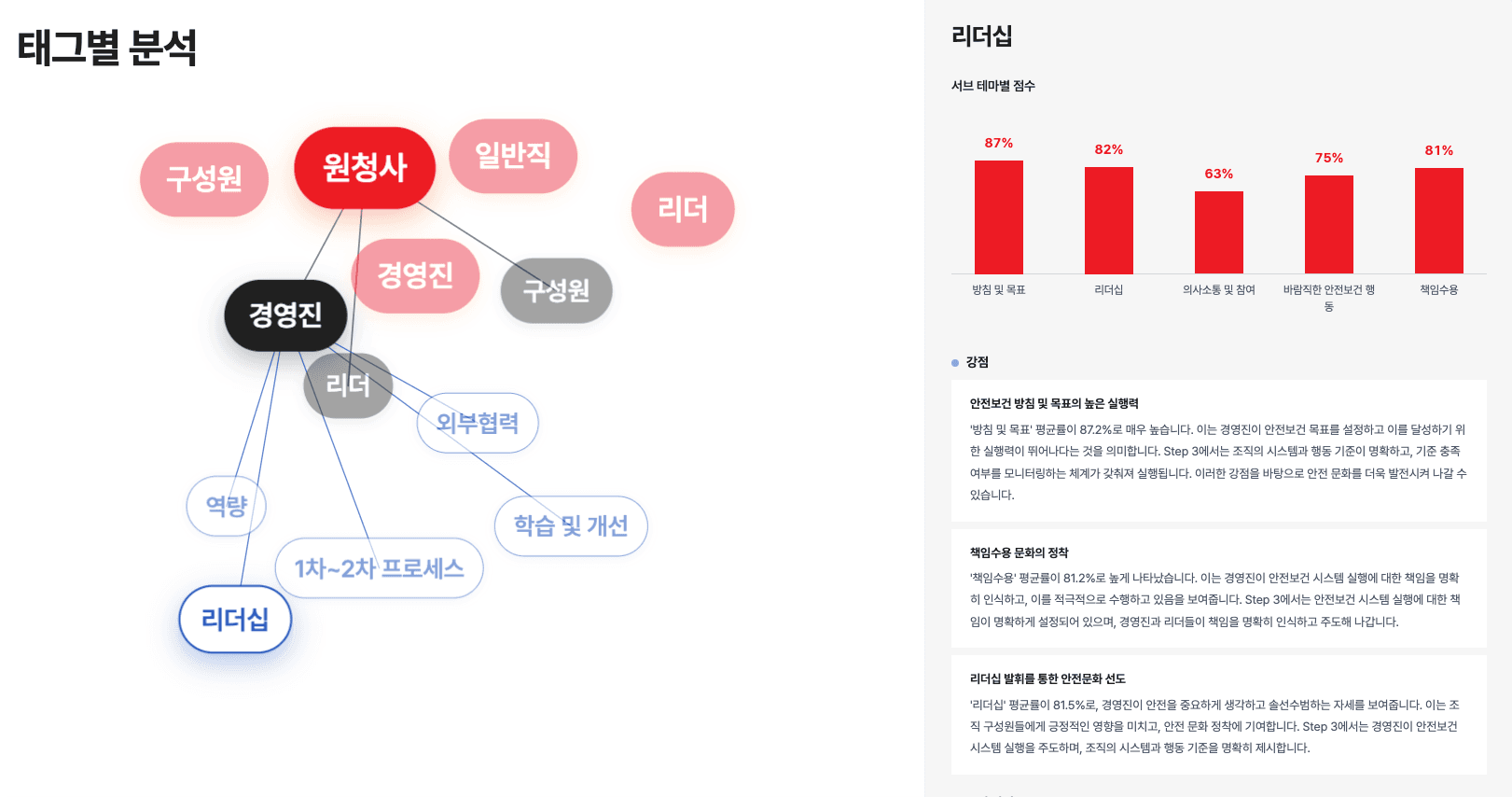
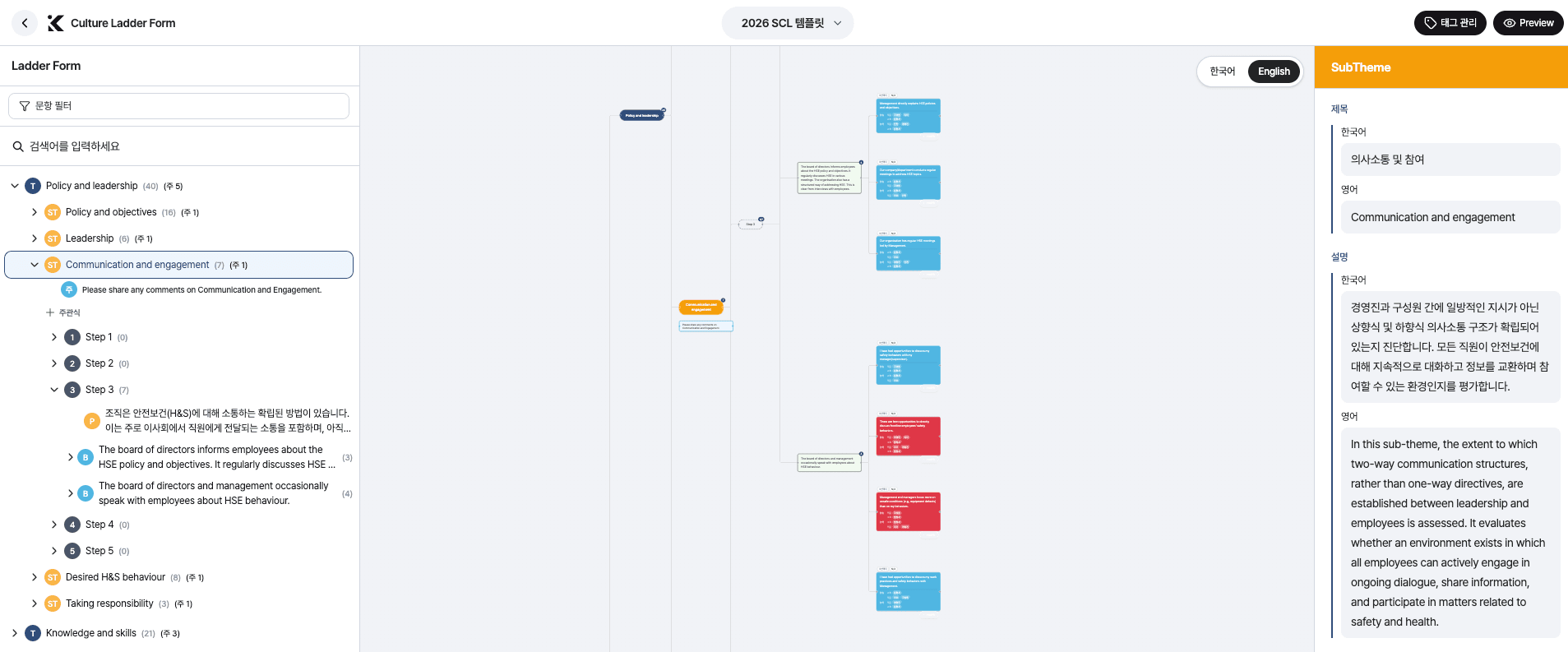
A single map, not an average. Executives and workers see the same company in different colors. The score that used to close as a single average line survives as two points on top of respondent × evaluation target × behavior step.
A timeline, not a single round.One survey is one photograph. Surveys accumulate into a timeline on the same benchmark, and when companies in the same sector gather, the timeline becomes the industry's distribution.
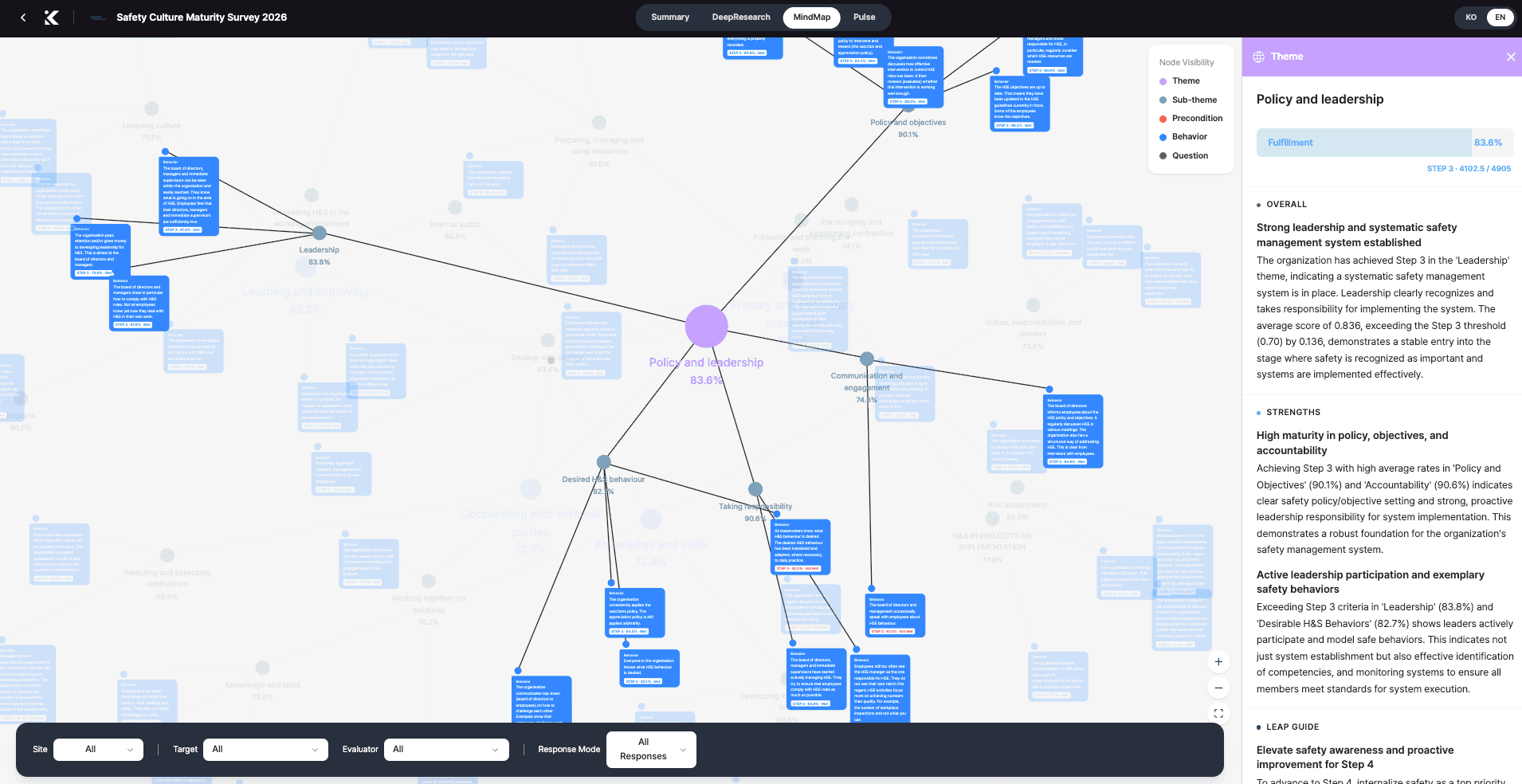
AI + domain, not one person. From tens to hundreds of thousands of responses, no single person can read them all. Only when the AI opens its mouth strictly inside the domain do responses at every scale get organized with the same honesty.
02 · Two hands
Where measurement and interpretation meet
Even with these five promises pinned cleanly, a single sheet of measurement results does not give a company the answer to so where do we go from here. Honestly, we who build the program don't know well what one specific company should change, and how, next.
Taking the data and reading the grain of that company, pointing at where things are stuck and deciding the next step together — that work cannot be done by code, AI, or a developer. It belongs to consultants who have been pointing at safety and organizational culture inside industry for a long time. The reason OpenKnockis built by schemalism · RIMS · LRQA together is one: only when the hand of measurement's honesty stands next to the hand of a domain expert's interpretation does the cycle actually close.
Measurement is ours, interpretation and direction belong to the consultants, moving in that direction belongs to the company. When the three places meet inside one cycle, measurement finally becomes change. There's one more place that makes that cycle complete a full turn inside the company.
03 · Action
Where improvement and action are followed on a timeline
Say a consultant hands the company a single line of improvement direction. If no one tracks on a timeline who moved in that direction, when they committed to finish, how far they got, that single-line intention ends up as just a memo.
Inside OpenKnock there's another program for exactly that place. A tracking and history-management program called Action. If Culture Ladder is the place of measurement, Action is the place where the single line of improvement that came out of that measurement is handed off as the responsibility of an owner, tracked by deadline and status, and held in one place where the company can see it through to closure.

The trace closed inside Action gets re-measured on the same benchmark when the next survey opens. Whether the one place that missed STEP 3 last year — tracked through Action — turned into a STEP 3 clearance this year; whether that single point moved on the timeline; the company sees.
If measurement and interpretation are the places where the cycle starts, Action is the place that makes the cycle turn a full round and come back to measurement. The question thrown out at the start of the series closes in the last part.
I'm building the program that lets this flow actually run inside a company. OpenKnockis a safety and organizational-culture platform that binds measurement and consulting into a single cycle. Hyundai Mobis · Kumho Petrochemical · POSCO International — three companies from three different industries — have already stacked around 15,000 responses on the same map and are turning the same cycle survey after survey. If you'd like to bring this cycle into your company, come by.
Written by

Yunhwan Jeong
Founder
Runs schemalism. Develops the business from an engineer's vantage — enjoys taking a hypothesis, validating it firsthand, and pushing it into the next bigger stage. Picks the next move every time at the seam where code meets business.
Part of this series
Can organizational culture actually be measured?
OpenKnock Culture Ladder is a survey-based diagnostic for organizational safety culture. The benchmark isn't ours. We lifted NEN SCL, the Dutch national safety-culture certification standard, and use its five-step ladder as is, asking which of the five rungs a company stands on, round after round, against the same benchmark. Built by schemalism with RIMS and LRQA, and already pinned in place on the same benchmark by Hyundai Mobis, Kumho Petrochemical, and POSCO International, ~15,000 responses in. Six essays on what we saw between measurement and change.
All parts
06

PART 01
Atmosphere isn't culture
PART 02
Five rungs from the standard
PART 03
The core
PART 04
Rounds and benchmark
PART 05
AI inside the domain
- You are here
PART 06
From measurement to change