
Atmosphere and culture are not the same
Atmosphere is the outcome, not the cause. To act before the atmosphere turns, you have to measure the pattern beneath it, not the atmosphere itself.

It looked so good in the interview. “Flat.” “Autonomous.” “Great people.” A year in, it's a different company. Meetings stretch, decisions slip, nobody owns the thing.
We tend to read this as “the atmosphere has changed.” We read it as atmosphere and we respond to it as atmosphere. But atmosphere is the outcome, not the cause. What actually changed is the organizational culture beneath it. And culture moves far slower than atmosphere. Once it tilts, no amount of atmosphere will pull it back.
01 · Weather vs Climate
Atmosphere is the weather. Culture is the climate.
Atmosphere behaves like weather. The week a good project lands, it's sunny. The month a quarter misses target, it's overcast. It shifts on a quarterly cadence. Read a company by atmosphere and your diagnosis shifts on the same cadence. Useless for anything but the moment.
Organizational culture behaves like climate. ‘The way work actually gets done around here.’ Set it once and it holds that shape for five years.
- Who actually makes a decision
- Whether bad news travels up, or gets stuck
- Whether the person who reports a mistake is thanked, or punished
- Whether the youngest person in the room can speak up without checking
These do not shift day by day the way atmosphere does. They are patterns, behaviors repeated hundreds of times. And the fact that they are patterns is exactly where measurement becomes possible.
02 · Pattern
So it can be measured
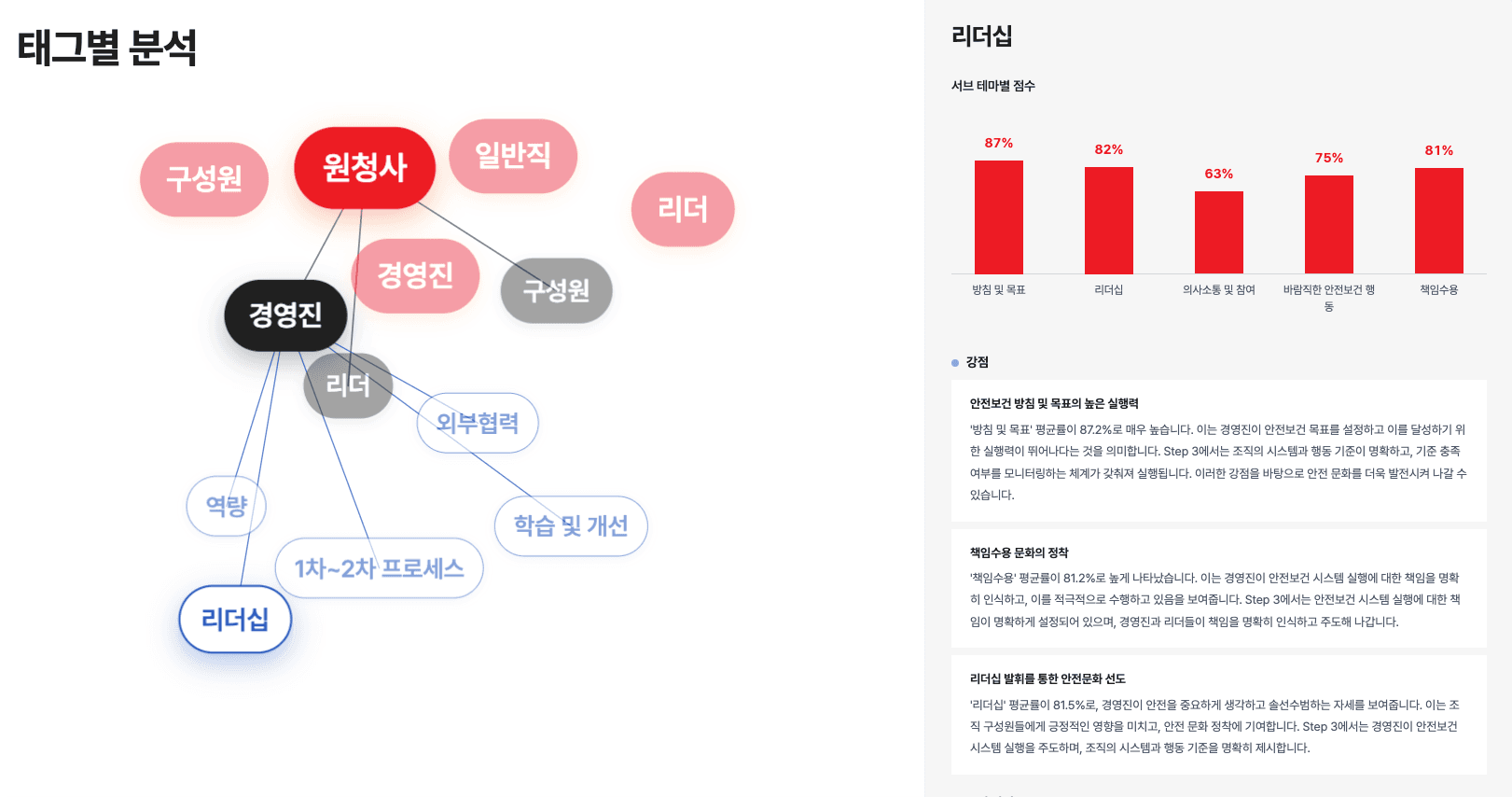
“Culture is abstract; you can't measure it” has been the easy line for a long time. But patterns can be measured. Time to a decision. Incident-reporting rate. The gap between an executive's score and a worker's score on the very same question. All of them numbers. Culture isn't unmeasurable; we just didn't have a model that cut it into measurable units.
What gets measured gets managed.
The line, often attributed to Drucker, lands one weight heavier on a safety practitioner. Read by atmosphere and you respond only after the atmosphere has turned. Meetings multiply after the incident. Measure by pattern and you can act before the atmosphere turns at all.That's why safety and culture begin in the same place. Early signal, not late response.
03 · The Question
Was what we measured really culture?
While we were building OpenKnock Culture Ladder, the question we kept circling back to was this one.
Was what we measured really ‘culture,’ or just the mood of the day?
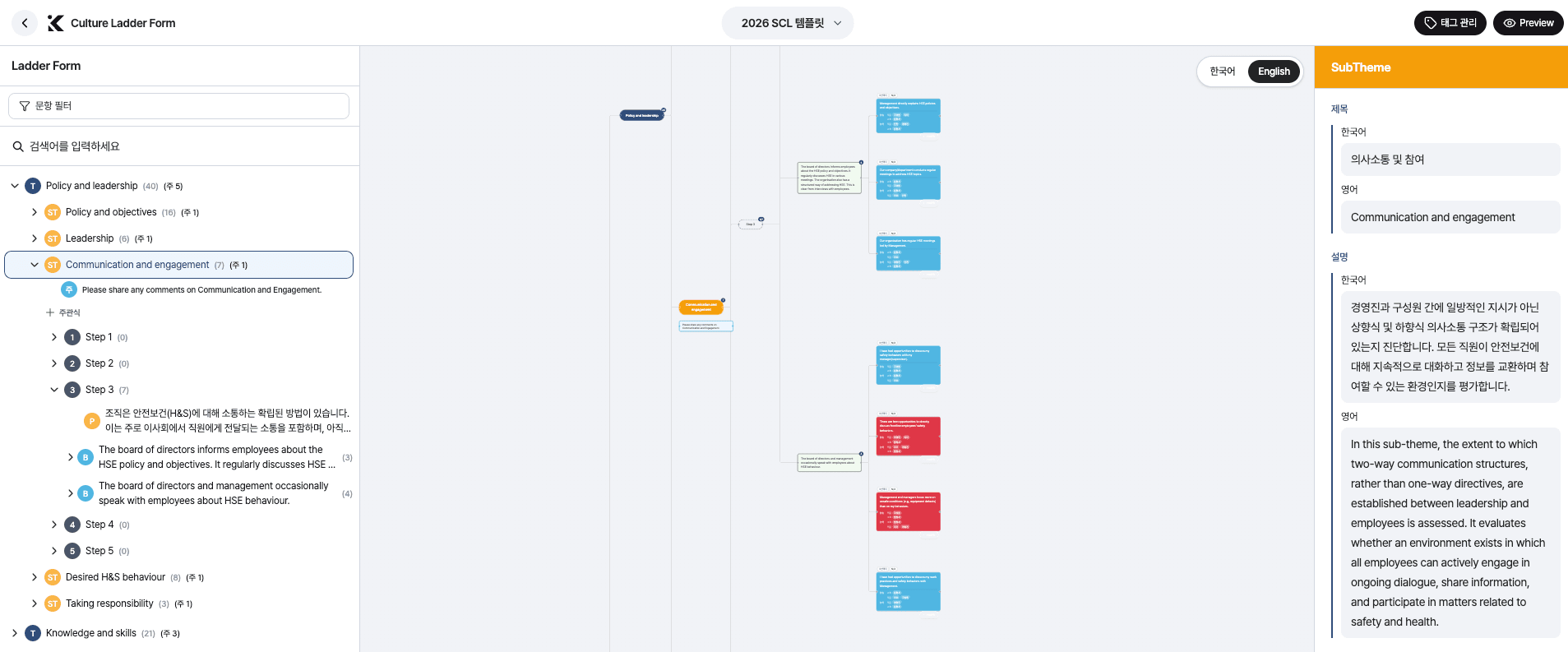
Answering it meant first deciding which model would slice culture into pieces. Without measurable units in your head, you can't write a single survey item. And with the wrong model, you can measure all you like and the company still won't know what was measured. That is how the all-too-familiar “another solid year” report gets produced.
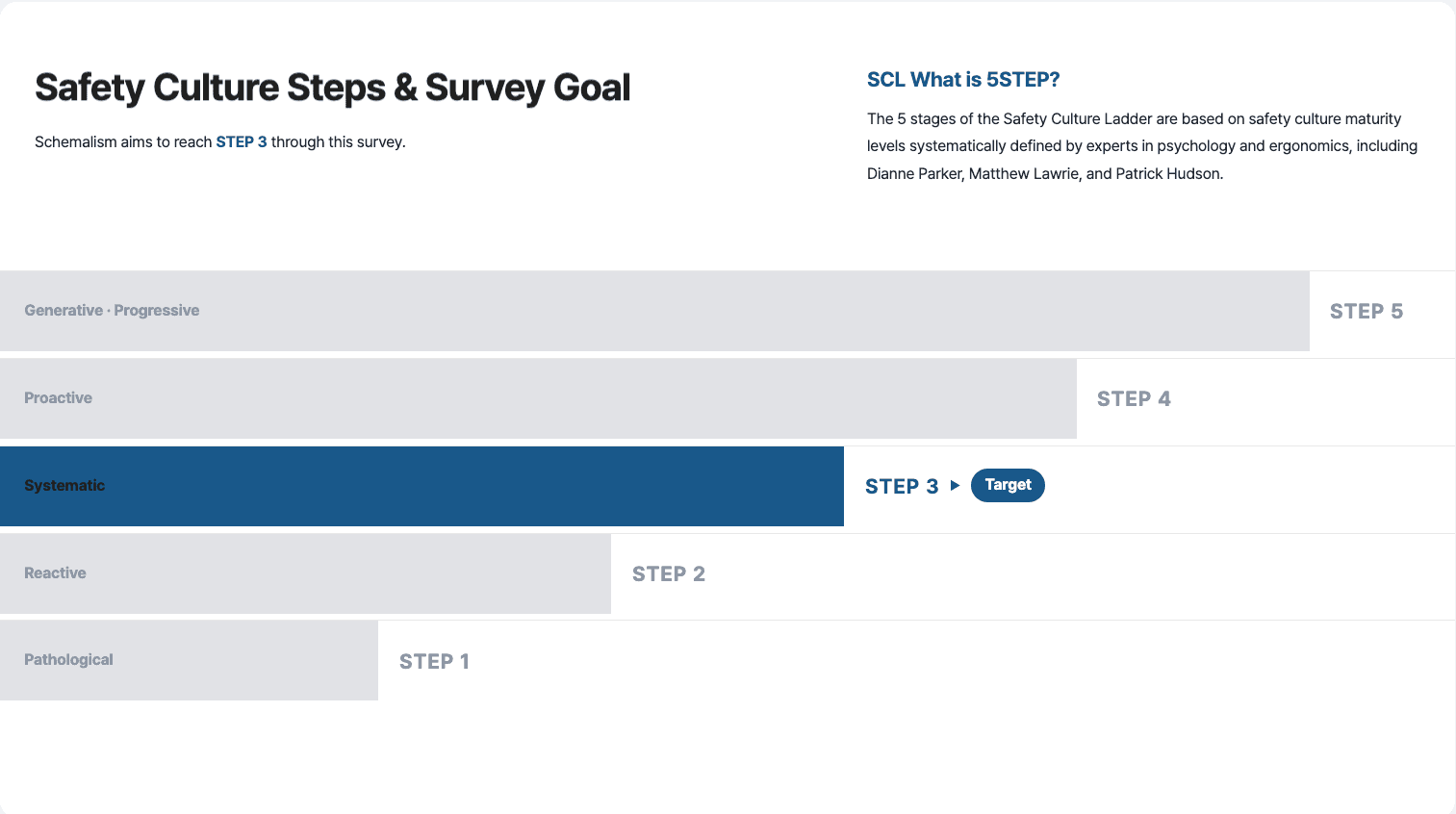
The model we adopted, the SCL five-step ladder, born out of British safety psychology, is the subject of the next part. Cut culture honestly once, and a company comes to know its own place.
Written by

Yunhwan Jeong
Founder
Runs schemalism. Develops the business from an engineer's vantage — enjoys taking a hypothesis, validating it firsthand, and pushing it into the next bigger stage. Picks the next move every time at the seam where code meets business.
Part of this series
Can organizational culture actually be measured?
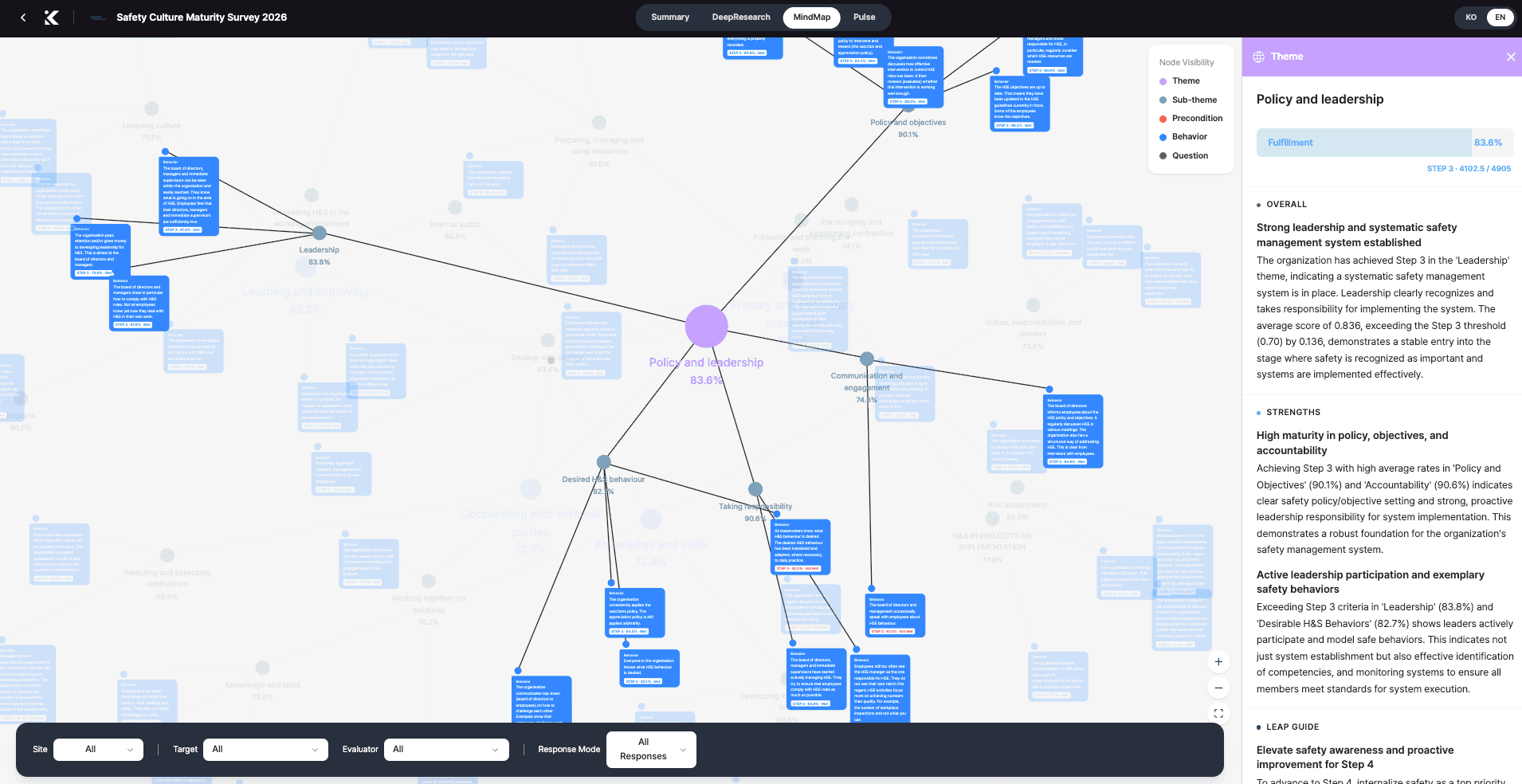
OpenKnock Culture Ladder is a survey-based diagnostic for organizational safety culture. The benchmark isn't ours. We lifted NEN SCL, the Dutch national safety-culture certification standard, and use its five-step ladder as is, asking which of the five rungs a company stands on, round after round, against the same benchmark. Built by schemalism with RIMS and LRQA, and already pinned in place on the same benchmark by Hyundai Mobis, Kumho Petrochemical, and POSCO International, ~15,000 responses in. Six essays on what we saw between measurement and change.
All parts
06
- You are here
PART 01
Atmosphere isn't culture
PART 02
Five rungs from the standard
PART 03
The core
PART 04
Rounds and benchmark
PART 05
AI inside the domain
PART 06
From measurement to change